
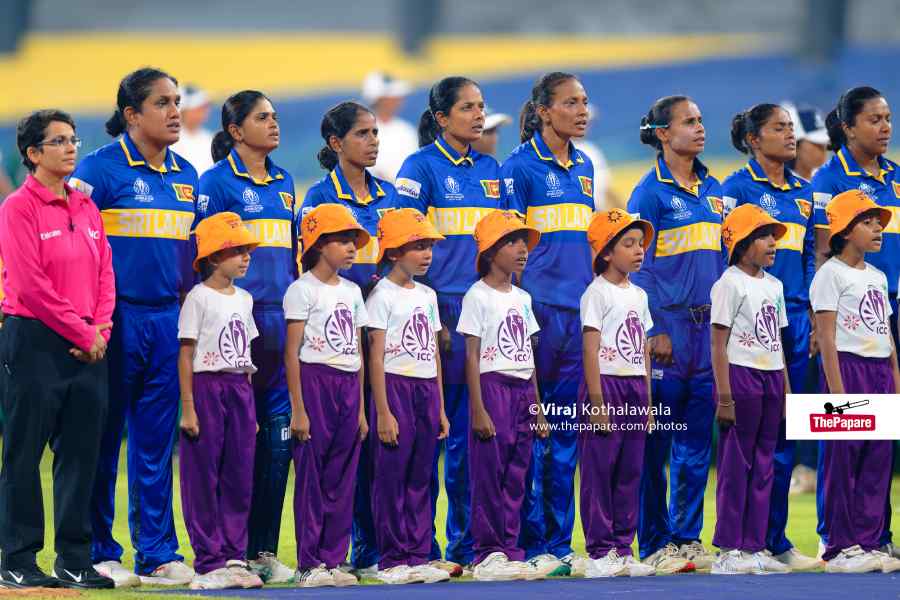
It has been a bittersweet campaign for Sri Lanka in the ongoing Women’s World Cup — a tournament that promised much but ended in heartbreak. Their fate was sealed after India clinched the last semi-final berth, leaving Chamari Athapaththu’s side to ponder what might have been.
Some may call it an opportunity missed, but the positives far outweigh the negatives. All in all, this was a campaign to be proud of. If New Zealand lose to England on Sunday, Sri Lanka will finish fifth; if the result goes the other way, they’ll settle for sixth — not a bad return for a team that failed to qualify for the previous edition in New Zealand.
>> Sri Lanka steadier in Asia Cup but flaws linger <<
It’s a crying shame that five of the 11 games in Colombo were washed out, with rain also curtailing several other matches played at RPS. Both Sri Lanka and Pakistan bore the brunt of the monsoon mischief, with three of their fixtures ending in no result. The White Ferns were on the ropes against Sri Lanka, while Pakistan had England in a spot of bother before the heavens opened.
Scheduling matches in Colombo at this time of year was always flirting with danger. That’s precisely why Dambulla was built — to escape the capital’s soggy fate. Why that venue wasn’t utilised remains a mystery. Sri Lanka Cricket had reportedly raised the red flag, recommending Dambulla as a safer bet, but the organisers brushed it aside citing logistical constraints. They must surely be ruing that decision now — a reminder that it pays to heed local wisdom.
Whether they end up fifth or sixth, Sri Lanka will pocket a tidy USD 700,000 in prize money — a much-needed shot in the arm for women’s cricket at home. The record crowds in India underline how vibrant the women’s game has become. Unfortunately, Sri Lanka’s attendance figures took a beating due to the rain. Even on fair weather days, one doubts if Colombo would have packed 20,000 fans like Indore, Visakhapatnam or Bombay — a sign there’s still some way to go in building a fan base.
Credit, however, must go to Sri Lanka Cricket for investing steadily over the last five years. If clubs, district and provincial associations show the same commitment, the women’s game will only grow stronger.
It must also be said that Sri Lanka remain overly reliant on skipper Chamari Athapaththu. When she fires, the team soars; when she fails, the batting flounders. Against Bangladesh, she single-handedly turned the game on its head — four wickets in four balls, a spell that will live long in memory.
>>Future of Sri Lankan cricket in safe hands, says Mathews<<
While a couple of bowlers have proved adept in white-ball cricket, consistently keeping things tight, the batting has been patchy. Nilakshika de Silva provided a rare spark, smashing the fastest half-century of the tournament, but others struggled for rhythm. Harshitha Samarawickrama and Vishmi Gunaratne — two players tipped to shine — failed to convert potential into runs. And if catching wins matches, Sri Lanka’s butterfingers cost them dearly. Had they held their chances against India in the curtain-raiser, it might have been Sri Lanka, not India, in the semi-finals.
As the curtain falls on their campaign, it’s fitting to remember Mrs Gwen Herat — the iron lady who pioneered women’s cricket in Sri Lanka. Back in 1996, she helped form the Women’s Cricket Association, and a year later, Sri Lanka were at their first World Cup. Funds were scarce, but Herat’s persistence persuaded Mr. Hemaka Amarasuriya of Singer to lend support — a gesture that kept the dream alive.
When the women’s body merged with Sri Lanka Cricket in 2006, the game gained structure and stability. We’ve come a long way since then, and Mrs Herat — who passed away earlier this year — would have been proud to see how far her girls have come, rain or shine.