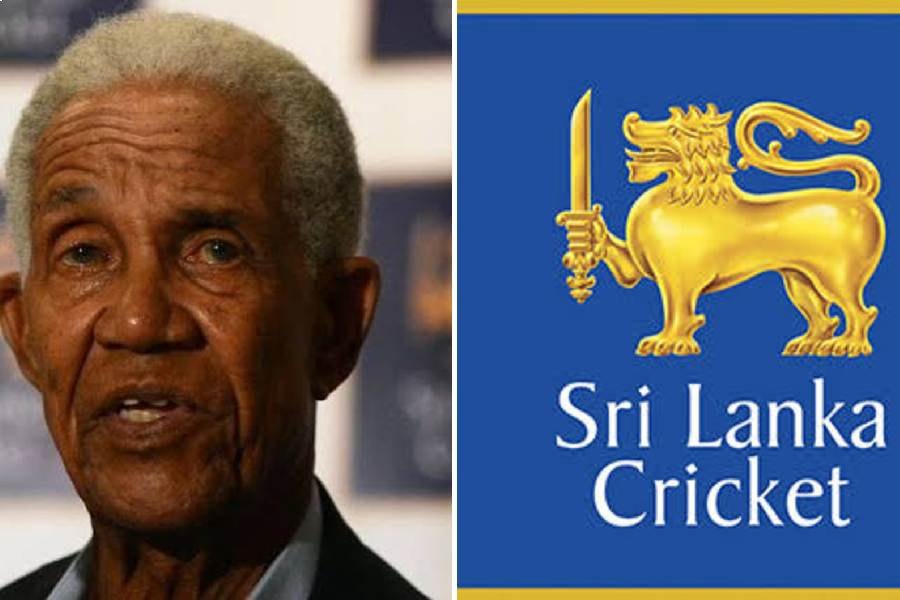
The funeral of Sir Garry Sobers took place earlier this week, with many of cricket’s greatest figures paying glowing tributes to the legendary all-rounder. The service in Barbados was attended by virtually every surviving West Indian great, a fitting farewell to a man widely regarded as the finest cricketer the game has ever produced.
Described by Sir Donald Bradman as the greatest player to have graced the sport, Sobers was every captain’s dream. He provided unmatched stability with the bat, scoring more than 8,000 Test runs at an average of 58, while his bowling yielded 235 wickets at 34. He could take the new ball and bowl sharp left-arm seam, then switch effortlessly to left-arm orthodox spin or wrist spin as the ball aged. Few players in history have offered such extraordinary versatility.
As a captain, Sobers was a fearless maverick, always prepared to gamble in pursuit of victory. Sometimes those bold moves backfired, most famously against England in 1968 when he declared twice at Port of Spain only to lose both the Test and the series. The story has since become part of cricketing folklore. Arriving at Heathrow to begin his county stint with Nottinghamshire, an immigration officer greeted him with a smile and asked, “Mr Sobers, have you got anything to declare?”
Sri Lanka’s relationship with Sir Garry flourished after his retirement, when the late Gamini Dissanayake invited him to coach the national side. It proved to be one of the most significant appointments in the country’s formative years of Test cricket.
It was Sir Garry who insisted that a teenage Arjuna Ranatunga be selected for Sri Lanka’s inaugural Test in 1982. While captaining SSC as a schoolboy, Arjuna had caught Sobers’ eye, prompting the great man to remark that the youngster reminded him of himself in his younger days.
When selectors hesitated to include the teenager in the Test XI, Sobers stood firm. His judgement was vindicated when Arjuna produced Sri Lanka’s first ever Test half-century.
A year later, when Sobers returned to Sri Lanka, Arjuna had lost his place in the national side. Once again, Sobers urged the selectors to recall him for Australia’s tour. The prediction proved inspired as Arjuna struck a superb half-century and established himself once more, playing a pivotal role as Sri Lanka defeated Australia in the ODI series with his all-round performances.
Sobers also travelled with Sri Lanka to the 1983 World Cup in England. His presence left a lasting impression on the squad. Roy Dias recalled recently that walking alongside Sir Garry made the Sri Lankan players feel “as though they were walking with a king.”
Having spent many years in county cricket, Sobers possessed an intimate knowledge of English conditions. Former fast bowler Ashantha de Mel often acknowledged how invaluable the great man’s advice was, particularly on exploiting English pitches.
His contribution extended beyond the boundary ropes. Sobers introduced several Sri Lankan cricketers to influential figures in England, helping them secure league cricket contracts at a time when Sri Lanka Cricket lacked the resources to adequately reward its players. Those opportunities provided many with a valuable source of income while broadening their cricketing horizons.
Sir Garry retained a deep affection for Sri Lankan cricket throughout his life. Since first becoming involved with the national team in the early 1980s, he remained fascinated by the country’s talent and frequently spoke with admiration about the quality of its players.
It was therefore entirely fitting that in 2015 Sri Lanka Cricket named the Test series between Sri Lanka and the West Indies the Sobers–Tissera Trophy, honouring two giants whose names will forever be intertwined with the rich cricketing history of both nations.