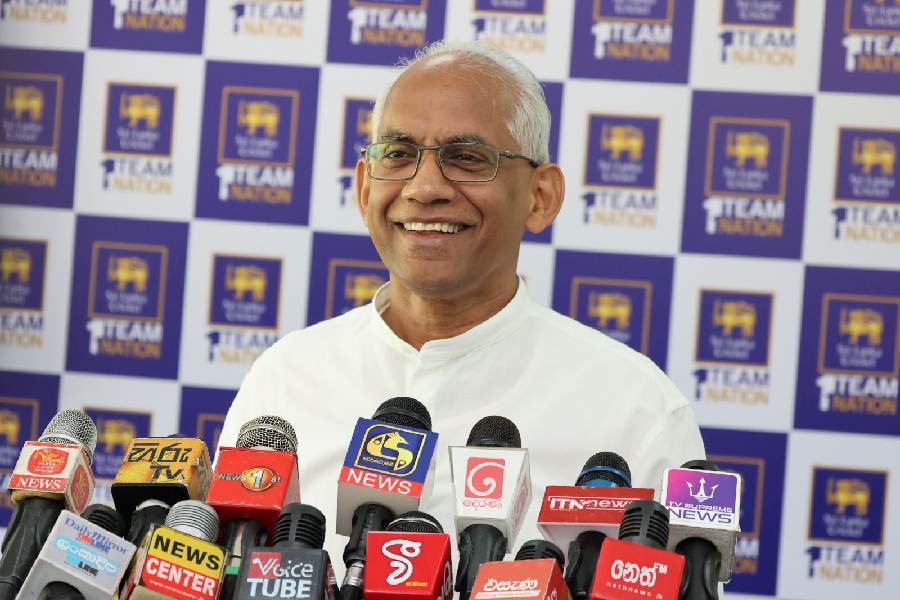
With a high-profile Interim Committee headed by former banker and opposition politician Eran Wickramaratne now at the crease, there is renewed hope among fans that Sri Lanka’s cricketing fortunes can be hauled out of the rough. The men entrusted with the job bring with them a wealth of experience in both cricket administration and corporate boardrooms. But for all the pedigree, there are a few pressing issues that demand immediate attention.
Top of the list is Sri Lanka’s treatment of Test cricket over the last decade. Since the advent of the World Test Championship, Sri Lanka Cricket has been content playing two-match series, with a three-Test contest as rare as a century on a minefield. There has been little appetite to schedule Tests outside the WTC cycle. The result is staggering, from July 2025 to June 2026, Sri Lanka did not play a single Test match. Why the game’s longest format is being avoided like the plague remains a mystery and it is a question the new committee must confront head-on.
>>Four Tests a year leaves Sri Lanka on a sticky wicket<<
Equally important is the need to strengthen ‘A’ team cricket and provide meaningful exposure to the Under-19 side. The ‘A’ team, often the finishing school for those knocking on the senior door, cannot be left undercooked. While a recent series against New Zealand ‘A’ was a step in the right direction, what is required is consistency. Ideally, Sri Lanka should host three ‘A’ teams annually and embark on three overseas tours. That is how you build bench strength, not by fits and starts, but by a steady pipeline.
The Under-19 structure, on paper, is sound. Yet, when it comes to ICC and ACC events, performances have been underwhelming. Somewhere between planning and execution, the wheels have come off.
Women’s cricket is another area where Sri Lanka has lagged behind. Over the past decade, the ICC has poured significant resources into the women’s game, and several nations have seized the moment. Sri Lanka, however, has moved at a snail’s pace. In girls’ schools, cricket struggles to break into even the top tier of sports, with netball, basketball, swimming, badminton and athletics dominating the landscape.
>>Future of Sri Lankan cricket in safe hands, says Mathews<<
This is an area that demands urgent intervention. Authorities must reach out to schools, provide equipment, improve access to grounds and actively encourage participation. A clear five-year plan, say, targeting 500 girls’ teams islandwide, would be a meaningful starting point.
That’s the long-term play. In the short term, Sri Lanka Cricket could establish provincial academies dedicated to girls’ cricket, free of charge, utilising existing coaches and facilities to widen the net. The more you cast it, the better the catch.
Then there is the long-standing issue of centralisation. For far too long, Sri Lankan cricket has revolved around Colombo. While schools across the island continue to produce talent, the number of clubs competing at the elite level outside the capital remains painfully low. Kurunegala has fought a lonely battle to stay relevant, but traditional hubs like Kandy and Galle – despite rich school cricket cultures – barely feature at the top tier.
If the game is to grow, it must spread its wings. There has to be a deliberate push to strengthen club cricket in these regions. Every journey begins with a single step and perhaps Kandy and Galle are as good a place as any to start.
Finally, there is the matter of infrastructure and presentation. Sri Lanka once prided itself on maintaining some of the cleanest and most picturesque grounds in the region – venues that players and fans alike looked forward to visiting. But during the recent World Cup, standards slipped alarmingly. Maintenance was neglected, and iconic venues like RPS resembled concrete jungles, far removed from their former charm.
That was a bitter pill to swallow. For a nation that has always punched above its weight, both on and off the field, this is an area where improvement is not optional – it is imperative.