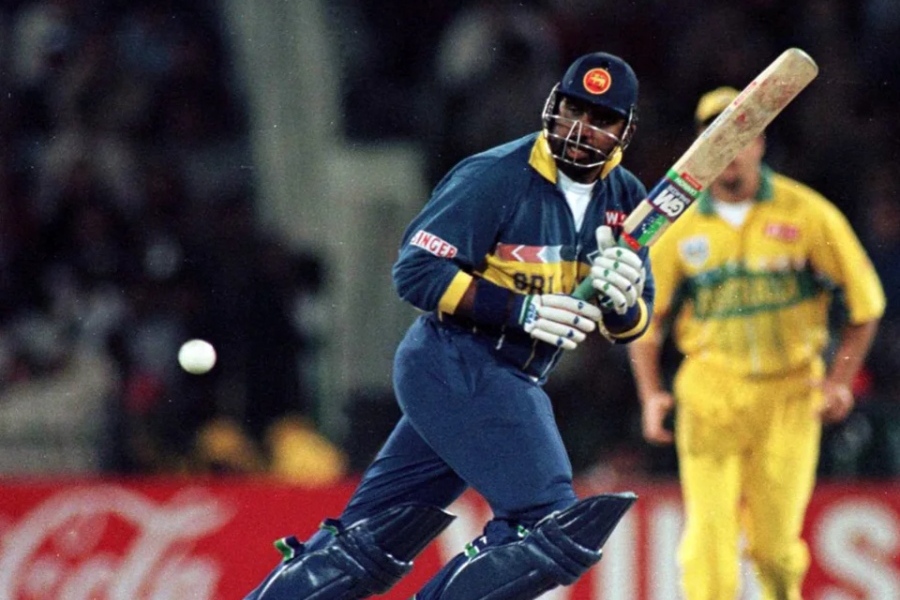
All week, the nation has been rolling back the years, reliving that golden week when Sri Lanka pulled off the ultimate heist and lifted the World Cup 30 years ago. It was a triumph forged against the odds, a campaign where the script was torn up and rewritten with audacity and belief.
The highlights reel, as ever, belongs to the usual suspects. Sanath Jayasuriya’s swashbuckling blitzes that sent new-ball bowlers into hiding, Aravinda de Silva’s silken counterpunches when the chips were down and Arjuna Ranatunga’s street-smart captaincy that kept one step ahead of the opposition. There were the rearguard acts from Hashan Tillekeratne and Roshan Mahanama, while Muttiah Muralitharan and Kumar Dharmasena spun webs that trapped the best in the business. Off the field, Duleep Mendis’ calming hand and Dav Whatmore’s fitness revolution ensured the side was fighting fit.
Yet, in a team of headline-makers, Asanka Gurusinha remains the quiet craftsman, the unsung hero who held the campaign together when others stole the limelight. Gurusinha was the very definition of a utility cricketer, a jack of all trades who could plug any gap the side demanded. He made his Test debut in Karachi as a teenage wicketkeeper-batsman, barely 19, stepping into the gloves in place of Amal Silva. Soon, he was asked to open when the going got tough and when the cupboard looked bare in the seam department, he was even tossed the new ball filling the big shoes of Ravi Rathnayake. But it was at number three that he found his true calling, the engine room of the batting line-up.
- Four Tests a year leaves Sri Lanka on a sticky wicket
- Future of Sri Lankan cricket in safe hands, says Mathews
That role produced some of his finest work, none more memorable than the defiant 143 at the MCG, a knock carved out of grit and gumption, still the only Test hundred by a Sri Lankan at that iconic venue. It was a back-to-the-wall effort, the kind that separated the men from the boys.
Make no mistake, Gura had gears. He could shift through them and dismantle attacks with authority. But the 1996 blueprint demanded something different. While Jayasuriya, Kaluwitharana and Aravinda were given a licence to thrill, to take the aerial route and keep the scoreboard ticking at breakneck speed, Gurusinha was cast as the anchor, the man tasked with batting through the innings and keeping the ship steady.
It was a thankless job. As crowds lapped up the fireworks at one end, Gurusinha’s graft at the other often went unnoticed. The crowd wanted boundaries; Gura was content to nudge and nurdle, rotating strike and playing the percentages. At one point, even his patience wore thin and he asked the team management for a freer role. But the think tank held firm. Every side needs its glue and Gurusinha was Sri Lanka’s go-to man at number three; technically sound, good against pace and spin and capable of shifting gears and putting the bowling to the sword.
The final was against an Australian side that had all bases covered. Young Shane Warne was weaving his magic and winning half the battle before a ball was bowled. Batters often lost the contest in the mind long before they took guard.
But Sri Lanka had done their homework. With four left-handers in the top seven, they believed they could take the sting out of Warne, who in those days didn’t quite possess a venomous wrong’un. Australia’s plan was simple, squeeze the runs, unleash Warne and wait for the mistake. Sri Lanka were ready for that trap.
When Jayasuriya fell early in the final, the spotlight swung firmly onto Gurusinha. This was his moment to walk the tightrope, he had to put Warne away. And he did just that, picking off boundaries off Warne when required, but more importantly, keeping the asking rate under control. It was a masterclass in pacing a chase, ensuring the game never slipped out of Sri Lanka’s grasp.
If Jayasuriya lit the fuse and Aravinda delivered the knockout punch, it was Gurusinha who kept the innings on an even keel, the man who made sure the chase never went off the rails.
The World Cup triumph ushered in a new era, central contracts, bigger paydays and a seat at cricket’s top table. But fate dealt Gurusinha a different hand. Just months after reaching the summit, he walked away from the game at 29, missing out on the riches that followed.
Tipped as a future Sri Lankan captain, he never got the chance to lead. Yet there was no sour grapes, no looking back in anger. Gurusinha was content to let his bat do the talking and it had already said plenty.
In cricket, as in life, not every hero grabs the headlines. Some do the hard yards in the shadows, ensuring others can bask in the spotlight. In 1996, Sri Lanka had many match-winners, but they also had a man who held the innings together like glue. And that man was Gura.