Given his unique skill set, there was little doubt that Kamindu Mendis would develop into a handy white ball cricketer. Yet, somewhat surprisingly, it was in Test cricket that he first made the biggest splash. More than his much talked about ambidextrous bowling, it was the weight of runs that forced people to sit up and take notice.
Kamindu was such a prolific scorer in his early days that he not only became the fastest Sri Lankan to 1,000 Test runs, but also equalled Sir Don Bradman, reaching the landmark in 13 innings. Along the way, he became only the seventh Sri Lankan to score hundreds in each innings of a Test, joining an exclusive club that includes Aravinda de Silva and Kumar Sangakkara, two of the finest batsmen the country has produced.
What made those runs even more impressive was that most of them came from the lower middle order, at number six or seven. Batting with the tail is an art in itself and not everyone masters it. Kamindu did. Perhaps, in hindsight, that was where he should have remained.
There were those who felt he was batting too low and pushed for him to move up to number four. Since then, however, the runs have not flowed quite as freely. Now that Pasindu Sooriyabandara and Sonal Dinusha have made such telling impressions against India, you wonder whether Kamindu will retain his place once Dinesh Chandimal returns for next month’s tour of Pakistan.
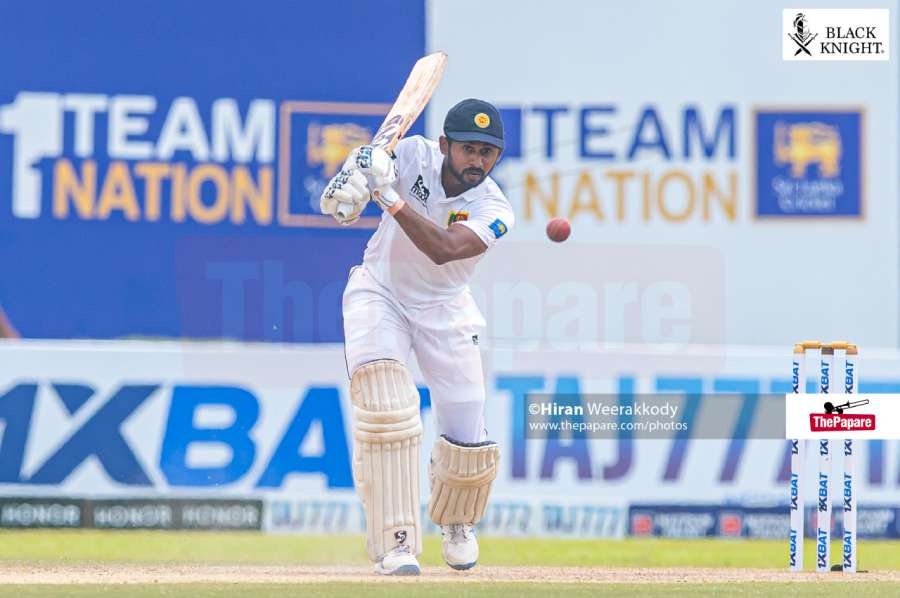
One of the hallmarks of Kamindu’s success was how organized he was at the crease. He had a clear plan against the short ball. Often, he would simply let it sail past. At other times he would duck underneath it or, if necessary, wear one on the body. There was no ego involved and no compulsion to prove a point.
Against India, however, there seemed to be a change of approach. Kamindu had decided that the short ball was going to be a scoring option and he took it on. Some flew over mid wicket. Others did not. It was precisely that approach that brought about his dismissal in the second innings while Sri Lanka were following on and fighting to save the Test.
There was understandable frustration. He was the vice-captain and, given the circumstances, greater application was expected. When the younger brigade and even the tail subsequently dug in and showed admirable resistance, the criticism of Kamindu’s dismissal only intensified.
Head Coach Gary Kirsten later offered some perspective. His message was essentially that if the shot is there, play it. There is little point in completely curbing a batsman’s natural instincts, although the challenge is to find a way of staying out of trouble while doing so.
Still, amid the dip in form, there was also the inevitable question: had securing an IPL deal perhaps distracted him a little?
Kamindu is known to have a meticulous routine at training, checking off multiple aspects of his batting. How he now recalibrates his approach against the short ball will be fascinating to watch. International cricket has a habit of identifying a weakness and then testing it relentlessly until a batsman comes up with an answer.
His appointment as vice-captain across all three formats in June appeared a sensible move at the time. Three months later, however, he has been relieved of that responsibility.
Perhaps the thinking is straightforward. There is little point saddling him with the burdens of leadership when he already has enough on his plate trying to rediscover the batsman who, not so long ago, was piling up Test runs at a rate matched by Bradman.