Sri Lanka were once the trailblazers who tore up the limited-overs manual and rewrote it in bold strokes. Armed with an audacious batting blueprint, they turned the opening overs into a slaughterhouse for bowlers. At the heart of the revolution was Sanath Jayasuriya, a man who treated the first 15 overs of the then-new field restrictions not as a time to settle in, but as a licence to launch.
The left-hander, raw and unorthodox, threw caution to the wind and sent leather flying to all corners. His partner-in-crime, the pint-sized Romesh Kaluwitharana, matched him for swagger, earning the moniker “pocket dynamo.”
Legend has it that young Sanjeewa Ranatunga, fresh from Sri Lanka Under-19 training, once told his elder brother and national skipper Arjuna, “I’m doing fine, but you must come see this fellow from Matara. He hits the ball with brutal force.”
>>Future of Sri Lankan cricket in safe hands, says Mathews
The very next morning Arjuna turned up at nets, spotted a certain Sanath Teran Jayasuriya and like an Imran Khan–Wasim Akram moment for Sri Lanka, pulled him into the fold.
Jayasuriya’s rise was not meteoric; his early international days were modest. But fate smiled in the lead-up to the 1996 World Cup, when he struck a purple patch. The rest was a golden era over a decade of record-breaking carnage, title wins and innings that bent the rules of batting. As Arjuna once put it: “Players like Sanath and Murali come once in 50 years. Aravinda? Once in a century.”
Fast forward to today, and the nation that once redefined batting now finds itself short on six-hitters. T20 cricket, with its franchise-fuelled obsession for muscle, has seen the rest of the world cultivate power hitters as a staple diet. Sri Lanka, by contrast, have lagged behind.
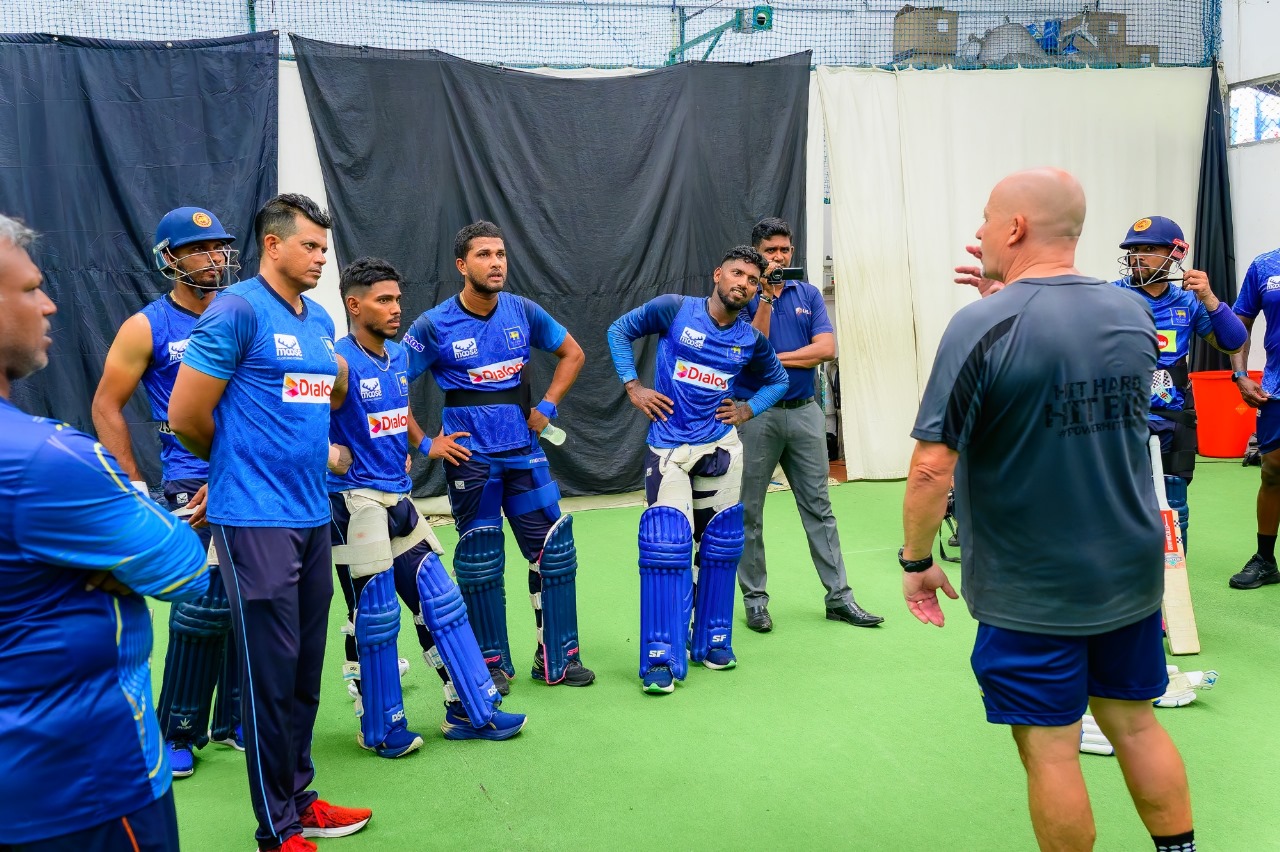
The good news is that the problem has been recognised. This week, the country’s elite cricketers were under the tutelage of Julian Wood, the former Hampshire batsman turned power-hitting guru, whose CV includes stints with IPL franchises and international sides. But a one-off clinic is no magic wand. Authorities would do well to get him back for a few more stints if they hope to make a dent before the next World Cup.
Sri Lanka’s issue is less about technique than timing, the inability to clear the ropes when it matters. Physique plays a role; unlike South Africans, Australians or West Indians, most Sri Lankans are not naturally big-framed. India’s success shows it can be overcome with targeted muscle training, and that’s where the science — and coaches like Wood — come in.
Yet power-hitting is just one piece of the jigsaw. Sri Lanka’s T20 frailty lies in folding cheaply and failing to bat out 20 overs, a problem they have largely solved in ODIs but not in the shortest format.
Avishka Fernando was the latest experiment at No.4, abandoned after a flop against Bangladesh despite his net sessions being a six-hitting exhibition. Skill is not his problem; translating it into match situations is. Dinesh Chandimal’s brief audition followed and now the selectors’ whiteboard is wide open ahead of the Asia Cup.
>>New cycle, new faces: Sri Lanka ready to roar
Beyond the top four of Kusal Mendis, Pathum Nissanka, Kusal Perera and Charith Asalanka, the batting order is a game of musical chairs. The ongoing triangular among Asia Cup hopefuls might just unearth the missing pieces — or leave Sri Lanka still searching for someone to play the Jayasuriya role in a T20 world that no longer waits for anyone.
Patience is the key. Unlike on other instances, they are not in danger of needing to qualify for the main event. Both in UAE and Australia that was the case in 2020 and 2022. However, they need to fix the problem before long or face the consequences.