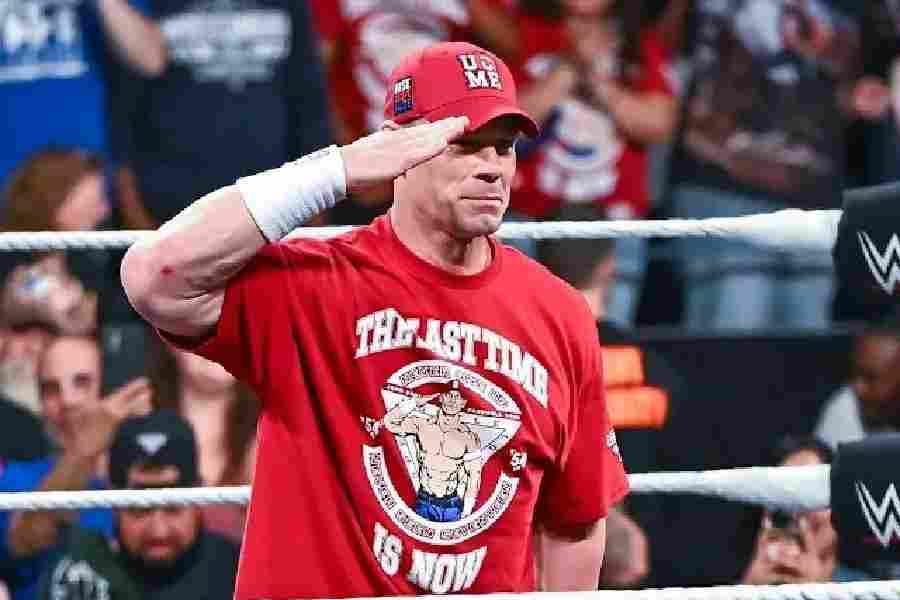
After over two decades as one of wrestling’s biggest icons, John Cena is set to retire this Saturday at Saturday Night Main Event.
There are moments in sports when an entire arena seems to hold its breath. Moments when disbelief becomes electricity, and electricity becomes history. One such moment took place on a winter night in 2008, inside Madison Square Garden, as the Royal Rumble countdown began to wind down. The clock hit zero and the world stopped.
For weeks, the world had believed that one of WWE’s biggest stars was out with a torn muscle, injured so badly that doctors predicted he would miss months of action, maybe even the entire year. Fans had accepted it. Opponents had moved on. The story had paused.
And then, in that single heartbeat between the buzzer and the entrance music, the impossible walked back into reality. The crowd didn’t cheer at first. They exploded. Thousands leapt to their feet as if pulled by a single thread of shock and joy.
A comeback no one expected, a return no one believed was possible, a moment that proved that sometimes, in the world of sports entertainment, miracles aren’t just written, they are lived.
It was the first reminder of something the world would come to know well, that this man’s story would never be defined by limits, timelines, or expectations. His career would be shaped by something far more powerful. A refusal to surrender, and the very spirit behind the words he would one day make famous, “Never Give Up”.
This is not just the story of a champion, but the story of the man who carried WWE on his back longer, harder, and louder than anyone before him.
A Rookie With Nothing to Lose
In the early 2000s, WWE was still riding the momentum of the Attitude Era, powered by megastars like “Stone Cold” Steve Austin and Dwayne “The Rock” Johnson. But by 2002, both icons had stepped away from the ring for different reasons, leaving WWE searching for its next franchise player.
Around this time, a new generation was quietly taking shape in WWE’s developmental system, the iconic Ohio Valley Wrestling (OVW) Class of 2002, often considered one of the greatest talent classes in wrestling history. It featured future superstars Randy Orton, Batista, Brock Lesnar, and Shelton Benjamin. Emerging alongside these prodigies was a young powerhouse known as “The Prototype.”
On June 27th, 2002, that powerhouse walked through the curtain on SmackDown!, answering an open challenge from the face of the blue brand, Kurt Angle.
His name? John Cena. His statement? Two words that would define an era,
“Ruthless Aggression”.
Slapping Angle across the face, Cena didn’t just introduce himself, he declared war on mediocrity. Though Cena lost that match, fans saw something rare, raw fire, determination, and a presence impossible to ignore.
The Bars That Saved a Career
Despite a bright introduction, Cena’s rise wasn’t smooth. Weeks after his debut, Cena struggled to connect with the audience. Backstage, whispers grew louder.
“He’s not working.”
“He might get released.”
“He may never make it.”
His WWE career was this close to ending before it even began.
On the verge of being released from WWE, Cena found a lifeline through his boss’s daughter, and the General Manager of SmackDown!, Stephanie McMahon, in the most unexpected way possible. Stephanie caught Cena freestyling in the back of a tour bus and asked one simple question: “would you be willing to do the same in front of a live audience?”
With nothing to lose, there was only one answer coming from Cena, which was a big, confident “YES”.

And that was the birth of the iconic, no-holds-barred, R-rated Doctor of Thuganomics gimmick. A gimmick that spanned well over two years and gave us countless moments, including the iconic Halloween rap, the parking lot brawl with Eddie Guerrero, the storyline with Kurt Angle, and of course, the introduction of the ever-famous Five Moves of Doom.
Cena, or as you may also call him, the “Doctor of Thuganomics”, became an instant fan favorite despite being a heel. The fun he offered and his unapologetic character resonated well with the audience.
But was that enough?
The First Glimpse of Gold
WrestleMania XX in 2004. The iconic Madison Square Garden was deafening. Cena, now fully embraced by the WWE Universe as the Doctor of Thuganomics, challenged Big Show for the United States Championship. This was Cena’s first WrestleMania match and, in many ways, his declaration to the world that he belonged on the biggest stage.
During the match, a hungry Cena lifted the nearly 500-pound giant onto his shoulders, a moment that felt impossible at the time, and delivered an out-of-this-world FU, his signature move that would later become known as the Attitude Adjustment.
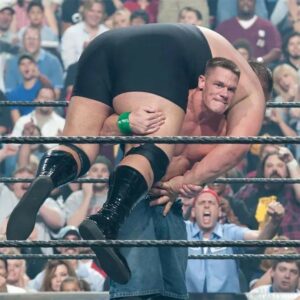
Three seconds later, the 26-year old Cena won his first title in WWE. It was a symbolic victory. The boy who almost didn’t make it had now captured championship gold in front of millions.
Fans began to see him as more than a charismatic mid-carder. WWE began to see him as a future leader. And Cena himself began to realize that his place in the company wasn’t uncertain after all, it was meant to be.
The Champ is Here

April 3, 2005. WrestleMania 21. John Cena vs. JBL. “Ruthless Aggression” had now evolved into unmistakable superstardom. Beating JBL for the WWE Championship signified the beginning of a new era, a Cena Era.
And Cena didn’t just win the title. He reshaped its identity forever.
Shortly after becoming champion, Cena introduced the WWE Spinner Belt, a design that spun freely at the center, perfectly aligning with the energy and charisma of his Thuganomics persona. Critics debated it. Purists questioned it. But fans fell in love with it. It was not just a championship. It was his championship.

From there, Cena went on to win 16 more world titles, with the most special one coming recently at WrestleMania 41. His 17th world title, earned by defeating the current face of the company, Cody Rhodes, made him the wrestler with the most world title reigns in professional wrestling history, surpassing the legendary Ric Flair.
The Never Seen Seventeen became a phrase etched into wrestling history.
The Image of an Era, Jorts, Sneakers, and “You Can’t See Me”
Beyond the championships, Cena crafted a visual identity unlike any champion before him. The jorts, the bright sneakers, the ever-changing T-shirts, the armbands, and the caps weren’t fashion statements. They were something more. Cena didn’t look like a typical wrestler; he looked like someone you might meet on the street. Someone familiar. Someone real.
In an industry dominated by extravagant costumes, his denim shorts became iconic. Kids dressed like him. Arenas turned into oceans of colorful “Never Give Up” shirts. Fans saluted him in unison. The jorts were not just attire. They were an identity that told everyone Cena didn’t just belong to WWE. He belonged to the people.
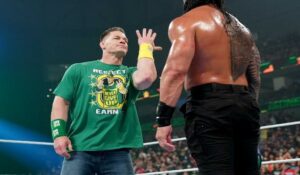
And then there was the gesture: “You can’t see me.” What began as a playful taunt evolved into one of the most recognizable pop-culture signals of the 2000s. It spilled out of wrestling rings and into classrooms, sports fields, and eventually the entire internet. Even people who had never watched a single wrestling match knew the move. And to this day, the memes still show up online, reminding everyone of how massive it became. It wasn’t simply a catchphrase. It became a trend that never died.
The rivals who sharpened him and the stories they created
No superstar becomes great alone, and Cena’s meteoric rise was forged through some of the most memorable rivalries in WWE history.
Kurt Angle
“The Wrestling Machine”, and Olympic Gold Medalist, Angle was one of the best wrestlers of all time, and he was Cena’s first true test in WWE. Facing Angle showed the world that Cena could stand toe-to-toe with the very best.
Edge
“The Rated-R Superstar”, Edge was possibly Cena’s greatest rival, the villainous foil to Cena’s clean, boy’s scout persona. Every match they had felt personal and exciting. Their chemistry made every fight unforgettable, especially their classic TLC match in 2006.
Randy Orton
“The Viper” was Cena’s career-long mirror image. They rose together, clashed for years, and became the two defining stars of their generation. Their rivalry shaped an entire era.
Triple H
A proven main-event star who helped show the world that Cena belonged at the top. Cena’s battles with “The Game”, helped confirm Cena as a true leader of WWE.
CM Punk
This rivalry felt different. Real, heated, and full of emotion, with Cena himself calling “The Best in the World” his “Wrestling Soulmate”. Their matches created some of WWE’s most dramatic moments and pushed storytelling to new heights.
AJ Styles
The Phonemenal AJ Styles forced out a new side of Cena as an in-ring worker. Their matches were fast, technical, and beautifully performed. They proved Cena could adapt and shine in any style of wrestling, putting together arguably one of the best trilogies in Wrestling history in 2016/17.
The Rock
A dream rivalry between two eras. Watched by millions around the world, it was a global phenomenon as the past collided with the present on wrestling’s grandest stage. What made it truly special was the mic work, Cena held his own against arguably the greatest talker in wrestling history.
Brock Lesnar
“The Beast” was undoubtedly the opponent who pushed Cena the hardest. His freak athleticism, power, and physical dominance forced Cena to show incredible toughness, heart, and resilience.
The Super Cena Era

Some fans loved it. Some fans hated it. But everyone remembers it.
The Super Cena era, where he overcame the odds time and time again, built WWE’s foundation when the company needed stability most. As TV ratings fluctuated, as WWE transitioned to a PG era, as new kids discovered wrestling, Cena was the constant.
Trusted by parents, adored by kids, driving WWE’s merchandise to new heights, and showing up every single night without ever mailing it in, Cena became the dependable backbone the company could lean on.
Even if critics argued he won too often, history has proven that Cena’s reliability and connection with the audience helped WWE survive and grow through one of its most transitional periods. Without Super Cena, WWE would not be the global entertainment machine it is today.
A Champion Beyond the Ring

For all the championships, feuds, and iconic matches, perhaps Cena’s greatest legacy lives outside the ring.
John Cena granted over 650 Make-A-Wish requests, more than anyone in history. No other athlete on Earth has done what he has for terminally ill children and their families. Cena never treated it as a duty. He treated it as a privilege.
And no matter how tired he was, no matter how far he had flown, he always made time for those kids. Because to them, he wasn’t just a wrestler, he was hope.
Off-screen, he became a symbol of resilience. For soldiers. For sick children. For anyone battling their own struggles. His “Never Give Up” message wasn’t just about marketing; it was a lifeline. Cena spoke to a generation of young fans who needed someone to believe in, someone who made them feel stronger.
On-screen or off-screen, John Cena lived his message with sincerity rarely seen in celebrity culture. He didn’t just entertain, he uplifted.
The Move to Hollywood Without Leaving Home
As Cena stepped into Hollywood, he didn’t abandon his wrestling roots. Instead, he reinvented himself again, a rare skill that only the greatest possess.
Unlike some who leave wrestling behind, Cena carried his WWE identity proudly into every new venture. He became a breakout star in comedies, family films, action franchises, and even animated movies. From Fast & Furious to superhero projects like The Suicide Squad and Peacemaker, Cena proved he could succeed anywhere.
Yet every year, he found his way home, whether for a WrestleMania match, a surprise return, to put over a young talent, or simply to lift the energy of the locker room. Cena never forgot the company that made him and the fans who believed in him.
The Last Time Is Now

July 6, 2024. Scotiabank Arena. Toronto, Ontario, Canada. Money in the Bank.
On that night, what many fans had feared for years finally became reality. John Cena stepped into the ring and announced his retirement. Shock rippled through the arena. Disbelief hung in the air. Hearts sank as fans struggled to process the words they never wanted to hear.
But moments later, that sadness turned into relief.
Cena clarified that he was not retiring that night. Instead, he revealed that 2025 would be his farewell year, a full retirement tour, giving fans one final chance to celebrate the career of a lifetime.
Cena’s retirement tour officially began on January 6, 2025, during the historic Netflix debut of Monday Night Raw. That night marked the first of the 36 dates he had in his farewell journey. At the time, a full year felt like a long time. But in the blink of an eye, only one date now remains.
The tour may not have been perfect. It could have been more nostalgic. There could have been more dream matches. Yet despite its flaws, it was filled with moments that will be etched in fans’ memories for a very long time.
There was the Royal Rumble, which kept fans on the edge of their seats, rooting for their childhood hero until the very last minute. There was the unexpected heel turn at Elimination Chamber. There was the historic 17th world title win at WrestleMania, a moment that cemented Cena’s place as the greatest of all time.
The tour also brought back nostalgia with renewed rivalries against CM Punk and Randy Orton, delivered a hell of a match against AJ Styles which felt like a tribute to wrestling itself, and a win over Dominik Mysterio that earned Cena the one championship he had never won, the Intercontinental Championship, officially making him a Grand Slam Champion.
This tour made fans weep in tears, not just from sadness, but from the chills and emotions it delivered. Fans wanted more of Cena, and they always will. But all good things must come to an end.
And now, that end is here.
This Saturday in Washington, D.C., John Cena will make his final in-ring appearance against “The Ring General”, Gunther, closing the final chapter of one of the greatest careers professional wrestling has ever known.
A Legacy That Will Never Fade
John Cena’s retirement will create a void larger than any storyline or championship vacancy. He will be missed because he made WWE feel hopeful. He made fans feel seen. He carried the company during uncertain times. He lived his message sincerely. He inspired millions through action, not just words.

His ethos – Hustle, Loyalty, Respect – was visible in every match, every promo, and every interaction with fans, showing that Cena’s commitment went far beyond winning championships.
His jorts, his spinner belt, his salute, his theme music are not just memories. They are symbols of an era that defined a generation of fans.
There will be future champions. There will be future megastars. But there will never be another John Cena.
As the crowd erupts one last time with “Let’s Go Cena,” as the cameras focus on his sneakers, his salute, his tears, and as he delivers that final Attitude Adjustment, we will all feel it.
A generation is saying goodbye to its hero.
The champ may no longer be here, but his legacy will never leave us.
Related Articles:
- Matheesha Wijesekara and Nethmi Wickramasinghe clinch SLS Round Robin Junior Open Squash Championship
- Australia name U19 World Cup squad: Peake to captain, Two Sri Lankan-origin players included
- Should the English stick to Bazball or look at a different approach?