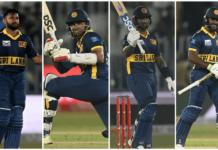
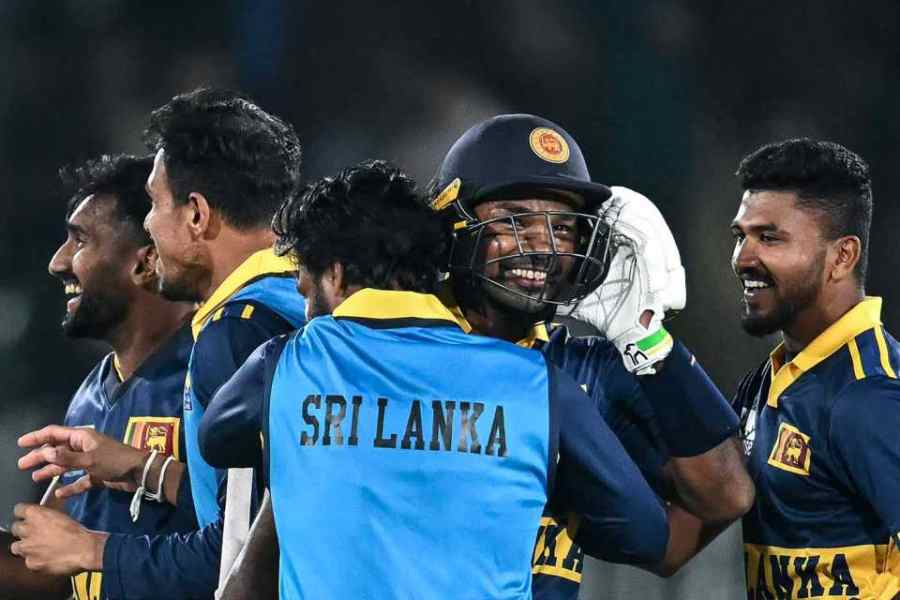
After months of disappointment, with Sri Lanka’s cricket team struggling to compete, the sport received a much needed shot in the arm in Rawalpindi on Thursday. Chasing a mountainous 430 against England, Sri Lanka pulled off a stunning victory, the second highest successful run chase in ODI history.
When Harry Brook hammered the fastest ODI double hundred, the first by an Englishman, Sri Lanka looked down and out. To be frank, most supporters would have settled for their team avoiding a collapse like a pack of cards.
Instead, they held their nerve, stayed in the hunt despite wickets falling at regular intervals and crossed the line with a ball to spare. For once, a daunting asking rate brought out their best.
We have often lamented the shortage of big hitters in Sri Lanka’s ranks. On Thursday, two men capable of clearing the ropes with ease answered the call. Dasun Shanaka and Avishka Fernando both deserved hundreds, but fell agonizingly short.
Both are on the comeback trail. Avishka has forced his way back through the sheer weight of his domestic runs, while Dasun’s recall after more than two years out of the ODI side is something of an experiment. On this evidence, it is one worth pursuing.
The biggest plus, however, was Pavan Rathnayake. A prolific scorer in domestic cricket, he has had supporters waiting for him to translate that promise onto the international stage. In Rawalpindi, he batted like a man who belonged. His unconventional stance may not win a beauty contest, but the scoreboard is rarely concerned with appearances.
Janith Liyanage, meanwhile, is carving out a reputation as a finisher. He sealed the chase with a six, leaving England wondering what more they had to do to win a game.
The victory gave Sri Lanka their first points of the competition after defeat by Pakistan in the curtain raiser. Second in the table, they will be looking to carry that momentum through and finish on a high. Winning the tournament could also lift them to fifth in the ICC rankings.
One remarkable chase, however, does not mean everything is tickety-boo. Finding the right combination remains a headache. Against Pakistan, Sri Lanka felt their tail was too long. They brought in Dunith Wellalage to strengthen the batting, only to discover that their fifth bowling options were leaking too many runs.
Solving that puzzle will be interesting. Several attempts to squeeze more runs out of the bowlers have yielded little, leaving the selectors trying to stretch a blanket that never quite covers both ends.
There are issues to address, certainly, but Sri Lanka should savour this victory. Beyond the confidence it brings, it offers a clearer picture of the players capable of filling key roles.
At the 2019 and 2023 World Cups, some of Sri Lanka’s selection decisions defied common sense. Hopefully, with a sensible head like Gary Kirsten helping shape preparations, there will be greater clarity and fewer lastminute gambles this time.
Next year’s 14 team World Cup brings a different format and reaching the Super Seven should be Sri Lanka’s immediate target. England are in their group, while Pakistan will be pursuing qualification from the other section. All three could find themselves scrapping for the remaining places as the tournament takes shape.
Rawalpindi has shown what Sri Lanka can do when their batting clicks. The challenge now is to make such performances a habit.