
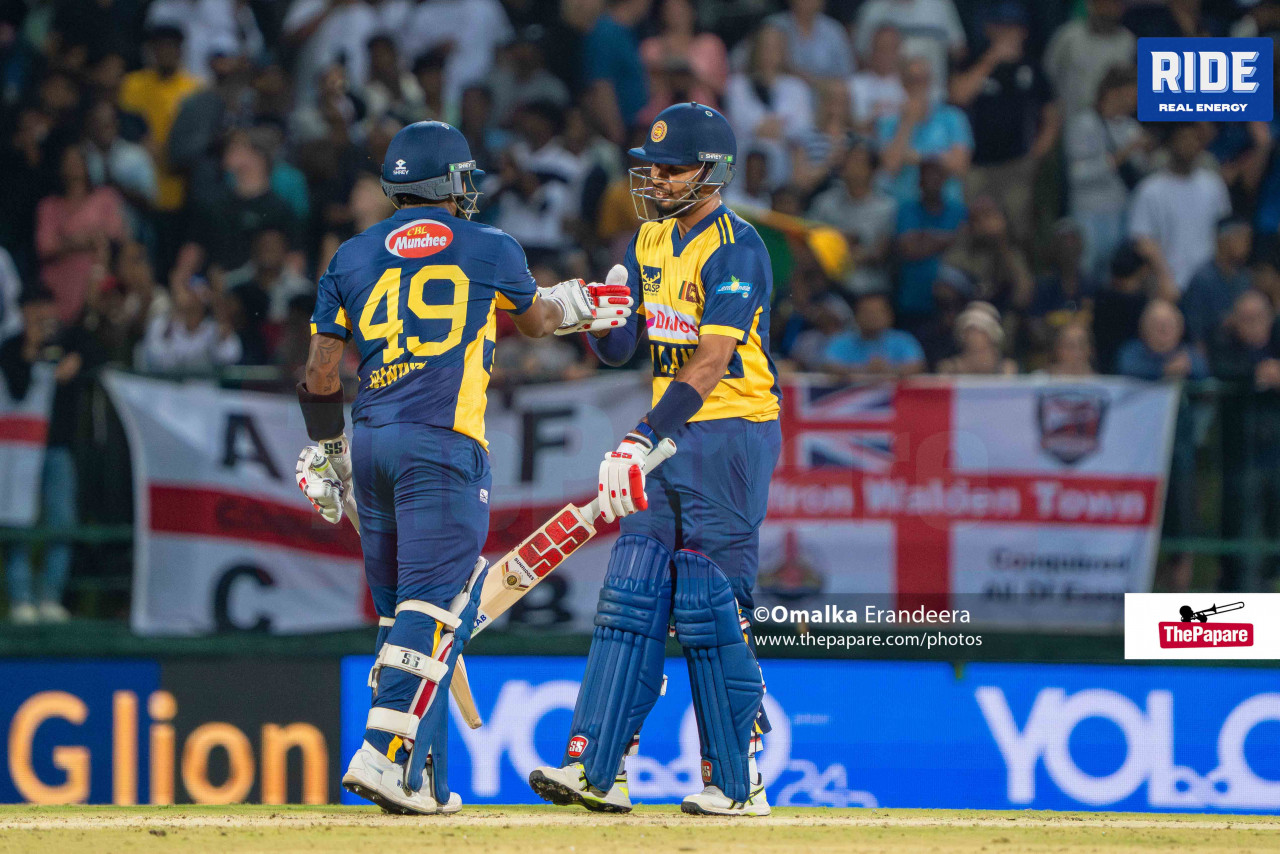
The opening T20I between Sri Lanka and England the other night served up a familiar tale, a glimpse of rich promise wrapped in the same frailties that haunted Sri Lanka during the last World Cup in the Caribbean and the USA.
On home turf with a global event looming, the warning lights are already flashing. The top order can come out all guns blazing, but the middle and lower order still have a habit of pulling the rug from under their own feet, often leaving overs unused in a format where every ball is gold dust.
>>Four Tests a year leaves Sri Lanka on a sticky wicket
At 76 for one after seven overs, Sri Lanka were cruising with the wind in their sails and 160 looked well within reach. But cricket, as ever, is a game of snakes and ladders. They didn’t just miss 160, they failed to double 76 and were bundled out for 133. Another collapse, another case of déjà vu and another bitter pill to swallow. Sadly, it is a script Sri Lankan fans know by heart.
Sam Curran grabbed the headlines with a late hat-trick, but the real thorn in Sri Lanka’s flesh remains leg-spin. Adil Rashid once again applied the brakes, striking three times soon after the Powerplay to turn the tide. Sri Lanka made hay when the field was up, but once the ring spread out, the innings lost its compass.
What was required was a steady hand, milk the bowling, keep the scoreboard ticking, run hard between the wickets. Instead, the middle order went fishing outside off, swinging for the hills and perishing in the process. Too many seemed seduced by the glory shot without earning the right to play it. In T20 cricket, you cannot build a house on sixes alone; someone has to lay the bricks.
This is where the selectors need to act smart. A middle-order player adept against spin is not a luxury but a necessity. Kamindu Mendis once looked tailor-made for that role, but he appears to have slipped out of favour, not for want of skill, but perhaps for sending the wrong signals.
That brings Pavan Rathnayake into the conversation. He plays spin with soft hands and a cool head, but fast-tracking him into a World Cup on the back of 50-over success smacks of panic stations. World Cups are not talent trials; they are the finished product of long-term planning. Sri Lanka, at the moment, seem to be assembling the puzzle just ahead of the tournament. Pavan should have been in the equation a year before the World Cup.
The muddled planning is further underlined by the return to tried-and-tested formulas. Drafting Dhananjaya de Silva as an all-rounder was meant to plug gaps, but early signs suggest the move has not quite paid dividends. Recycling old templates after promising a new blueprint suggests the team is running in circles rather than moving forward.
One silver lining was the bowling effort while defending a modest total. Matheesha Pathirana hit the straps at the right time, his slingy pace and awkward bounce asking serious questions of England’s batters. He made them hop, skip and miscue. With 20 or 30 more runs on the board, the story might well have had a different ending.
>>Future of Sri Lankan cricket in safe hands, says Mathews
Ultimately, the soul-searching must begin with the batters. They are seasoned professionals who understand match situations, yet application was in short supply. When five men patrol the fence, continuing to go aerial is not bold cricket, it is low-percentage cricket. This is not rocket science; it is game awareness.
Sri Lanka have the talent. What they need now is clarity, composure and cricketing common sense. Otherwise, when the World Cup spotlight turns on, these familiar cracks could once again widen into chasms.